
A striking image of a futuristic autonomous tractor working across vast farmland has captured the attention of technology enthusiasts, farmers, and social media users alike.
The advanced machine appears unlike anything currently operating in fields today. Featuring a sleek design, intelligent sensors, digital monitoring systems, and autonomous navigation technology, the concept offers a glimpse into what agriculture could look like in the decades ahead.
Although the image is a work of futuristic digital art and not a real machine currently in operation, many experts believe that some of its features may eventually become reality.
Agriculture has always evolved alongside technology.
Over the past century, farming has transformed from horse-drawn equipment to powerful GPS-guided tractors capable of planting, cultivating, and harvesting with remarkable precision. Today, many farms already use drones, automated irrigation systems, satellite imaging, and artificial intelligence to improve efficiency and reduce costs.
The futuristic tractor shown in the image takes those ideas even further.
Instead of relying entirely on a human operator, the machine appears capable of analyzing soil conditions, monitoring crop health, and making adjustments automatically while moving through the field. Advanced sensors could potentially measure moisture levels, nutrient content, and plant growth in real time.
Supporters of agricultural automation argue that technologies like these could help farmers increase productivity while reducing waste. Precision farming systems already allow many growers to apply water, fertilizer, and other resources only where they are needed.
As global populations continue to grow, improving food production remains a major challenge for governments and agricultural industries around the world.
Researchers are currently exploring a wide range of innovations designed to make farming more efficient and sustainable. Autonomous vehicles, AI-powered monitoring systems, robotic harvesting equipment, and smart irrigation technologies are among the most actively developed solutions.
Many experts believe future farms will rely heavily on data-driven decision-making.
Instead of reacting to problems after they occur, intelligent systems may be able to detect crop diseases, nutrient deficiencies, or water shortages before they become serious threats. This could help farmers protect yields while reducing environmental impact.
The image has also sparked discussions about the changing role of farmers.
While some people worry that automation could reduce traditional agricultural jobs, others believe technology will create new opportunities requiring advanced technical skills. Future farmers may spend less time operating machinery and more time managing data, monitoring systems, and overseeing automated operations.
Social media users have responded with both excitement and curiosity.
Some viewers describe the machine as something straight out of a science-fiction movie. Others believe similar technology could become common within the next few decades.
Whether that future arrives sooner or later remains uncertain.
What is clear, however, is that agriculture continues to be one of the industries experiencing rapid technological change. Innovations that once seemed impossible are increasingly becoming part of modern farming operations.
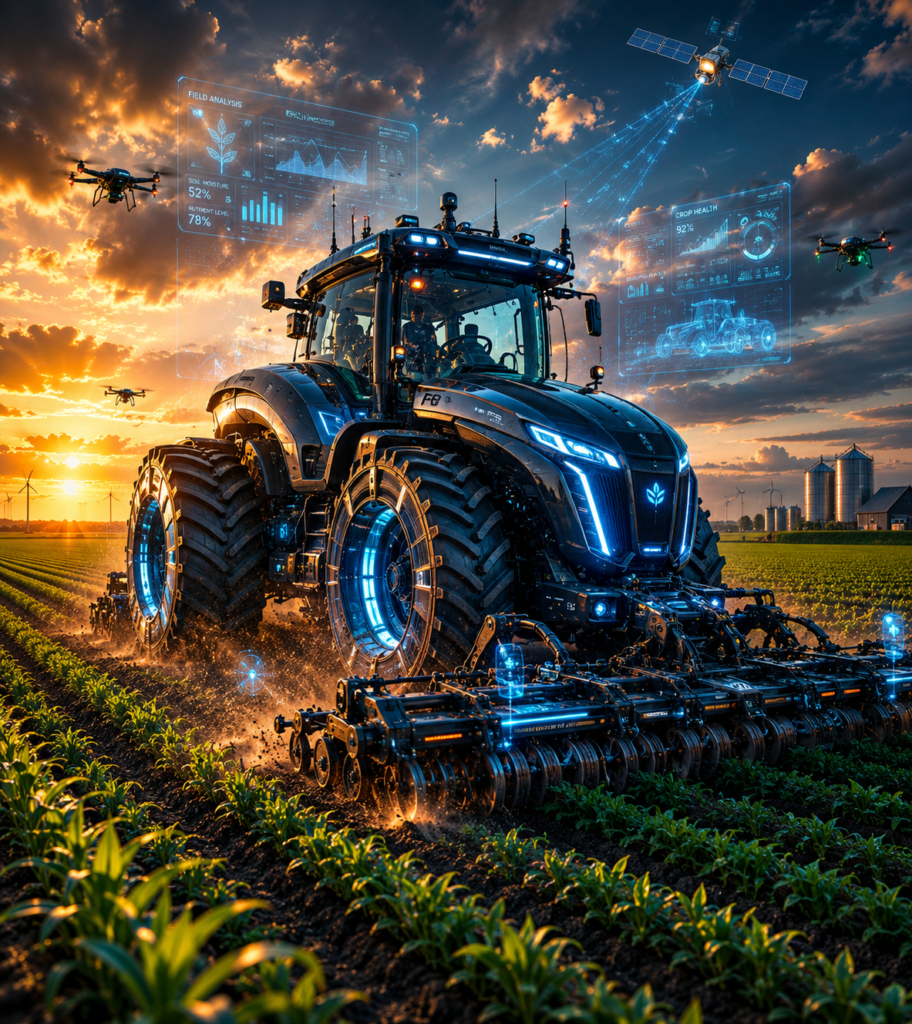
The futuristic tractor may not exist today.
But it represents a growing vision of how technology, automation, and artificial intelligence could reshape food production for future generations.
And for many people, that possibility is just as fascinating as the machine itself.





Leave a Reply